
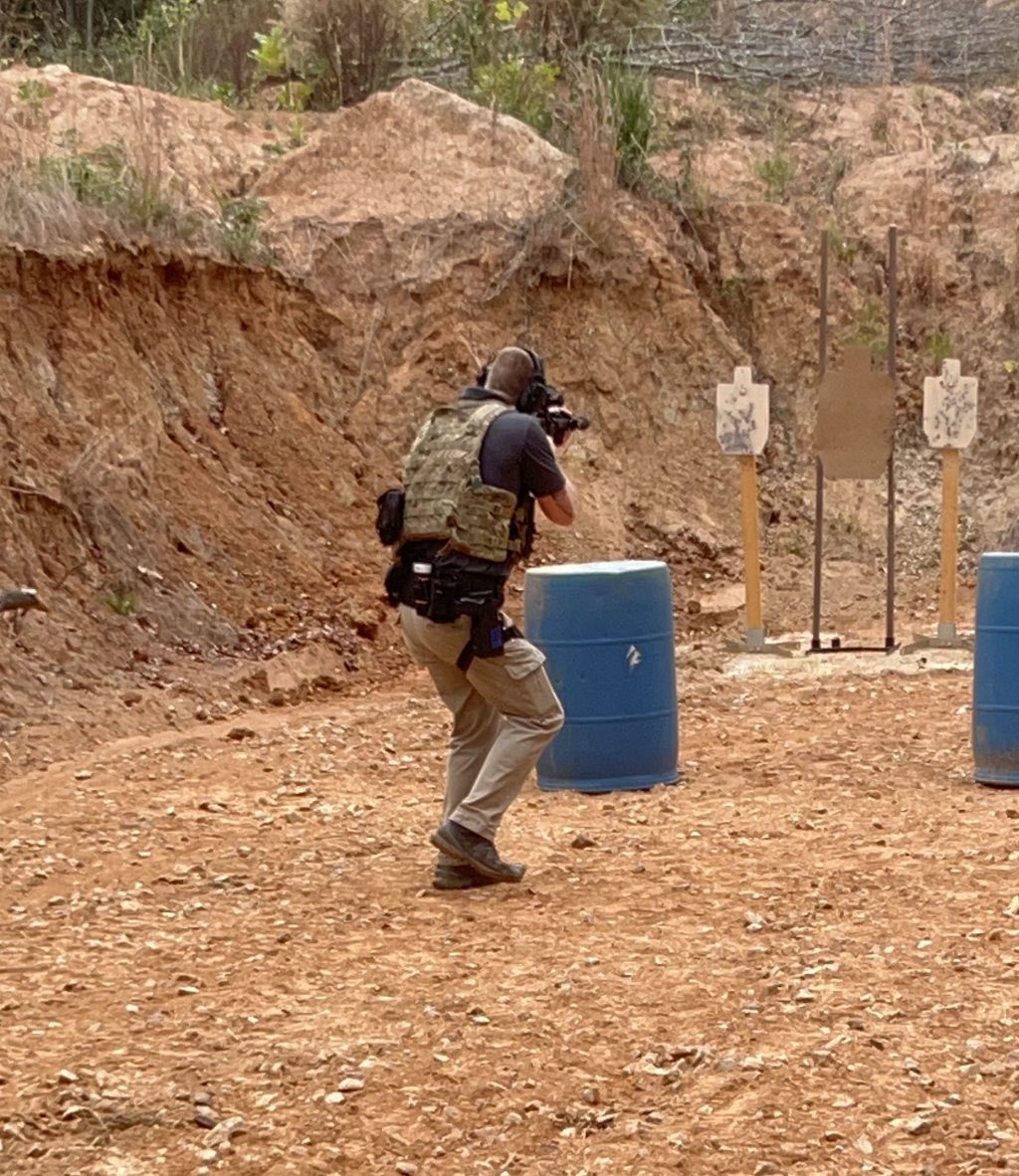
Do you really need hard armor plates for the Boogalou?
This is a question that simultaneously doesn’t get asked enough, and get’s asked to often without a concise answer. Let me explain… Most guys (and yes it is predominately men) decide the first thing they need beyond an AR15 and a Glock 17 is a a full set of plates followed by night vision (discussed in other articles).
So they ask the question of not, do I not need this? But what kind should I buy? Or they come to the conclusion long before that, that they don’t need body armor all together. I’ll make the case that all the premises stated above are incorrect and we should be asking an even different question. In reality what are we likely to deal with?
In planning military operations there are two questions always asked: What is the most dangerous course of action? What is the most likely course of action? Most dangerous (MDCA) is the most dangerous that’s still within the realm of plausible I.e. aliens dropping like Independence Day is not in the spectrum but civil unrest due to a pandemic, CME, WW3 or other topics may be.
The most likely course of action (MLCA) includes those things that are volatile situations that may not equate to the level of particularly dangerous on a massive scale. Hurricanes, pandemics, EMP, etc. You may be wondering about the crossover with some of these topics…
Pandemics could theoretically create mass panic and civil unrest putting them in the MDCA, but could simultaneously cause issues more mild like Covid19 falling into the MLCA category. This isn’t to say if only a few people die or even a lot die it’s not tragic, certainly Covid deaths were a tragedy. However, It didn’t kill 20% of the population like the Spanish Flu did, didn’t crash the economy like the great depression, and didn’t have millions of Americans eating of garbage bins. Without going into too much detail two instances can have massively different effects.
Finally Hurricane Katrina was certainly in the more dangerous things that happened to the residents but it doesn’t lend itself to the MDCA list because it was local. Meaning people in China, Russia or even Colorado were ultimately unaffected by it.
You will have to make the analysis on both spectrums in relation to your capabilities, equipment, stored supplies, etc. Also on the scale of whom it affects.
So… What the hell am I talking about and why does this matter? Because in 98% of these scenarios you are not walking around in full body armor gearing up for war, Zombies or any other doomsday scenario you have in the back of your mind. In the majority of these and pretty well all of the MLCA category you would be far better served by soft armor under a T-shirt or jacket with a pistol on your hip concealed.
When to Use Soft Armor…
- Civil unrest
- Daily use
- WROL
- Work
- Range time protection
- The list is endless
When to Use Hard Armor…
- Aliens invade
- Zombies storm the beaches
- WW3 brings the fight to US soil
Ok, there’s a little tongue in cheek here but you get my point. The reality is that soft armor is far more appropriate for most circumstances. Both civilian word or in regards to any instance of upheaval. That being said the next logical question that comes up is which armor do I get?
In purchasing armor hard armor generally starts around level 3 with level 4 always being hard. Realize the ratings for this are changing next year and it will now be called RF 1, 2 and 3 meaning rifle armor. Soft armor will be rated as HG meaning handgun as levels 1 and 2. Generally speaking I purchase armor that is level 3A (HG2).
I also look for a level one spike rating which is intended to stop a direct knife attack from 85/100 average size males. The price goes up substantially when we start looking at level 3 spike rating and you only move up about 11 points to 96/100.
This is obviously not an article on the ballistic ratings of each individual type but is geared more towards the ideology of wearing armor. Soft armor conceals and hard armor doesn’t. Soft armor has a lower rating but is perfectly adept at handling the situations we are more likely to find ourselves in.
Soft armor is versatile and can be worn without anyone knowing while at dinner with friends or during a chaotic incident without drawing attention to oneself. Hard armor makes you look like a tactical team is preparing to raid.
If you can afford hard armor too that’s a great benefit but in reality soft armor should be your first choice for standard protection as a civilian. Personally I use Safelife Armor rated as a level 3A with level 1 spike rating.
Conclusion
Hopefully, that gives you an idea of my thoughts. I’m not suggesting you don’t need hard armor. My main point here is that soft armor is far more versatile. For the same reason a pistol is more versatile than a rifle for protection if you were only going to pick one (because the pistol can be carried with you on a daily basis). So to is the soft armor more versatile for scenarios that would allow armor because it can actually be worn when we don’t know the imminent threat in front of us.
 Timberline Security Solutions
Leave a comment