
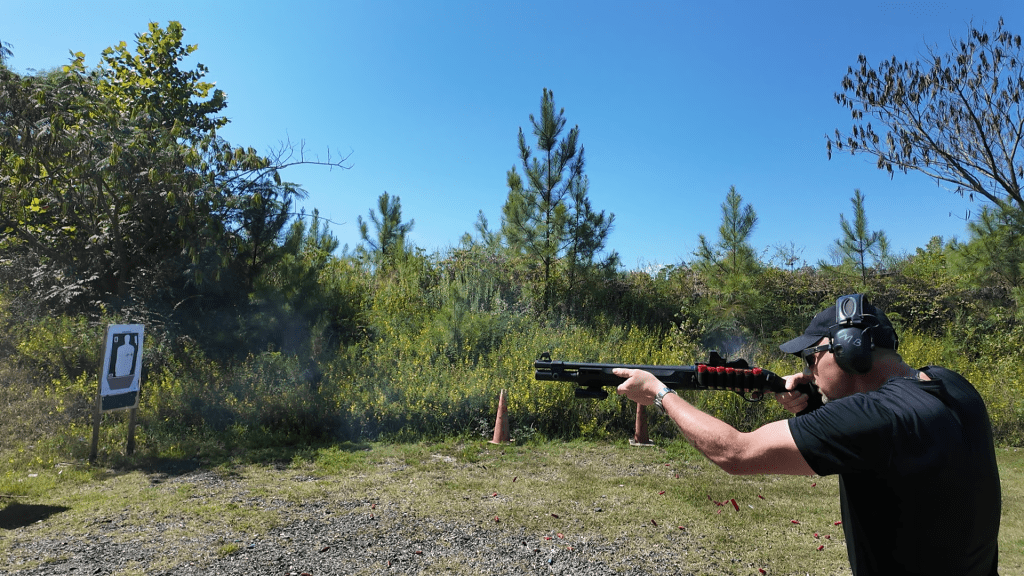
When it comes to setting up a shotgun for home defense, the first question you should ask is: is a shotgun truly the best option? That’s a deep topic—one worthy of its own article or even a book. For the sake of this discussion, let’s assume you’ve already chosen a shotgun. Now the question becomes: what kind? Pump-action or semi-automatic? That’s another debate, but I’ll touch on it briefly.
Before we dive in, let me offer a word of caution: don’t rush out and buy a bunch of new gear—or even a new shotgun—just because you read an article. Unless your equipment is truly subpar, what you already have will work. This guide is about optimizing, not replacing.
People have successfully defended their homes with muzzleloaders and break-action shotguns for generations. Don’t mistake gear for training. Gear helps, but training wins fights. With that out of the way, let’s talk shotguns.
Pump vs. Semi-Automatic: Which Is Best for Home Defense?
A decade ago, semi-automatic shotguns weren’t as reliable across different ammo types. And there’s some truth to the concept, just like revolvers being more reliable than semi-auto pistols. But at some point, reliability hits diminishing returns.
If we were purely chasing reliability, we’d all use bolt-action weapons. But in reality, we accept trade-offs for greater capability, and shotguns are no exception. Modern semi-autos have come a long way. So much so that pump actions are becoming increasingly outdated—except for specialized roles like riot control.
Still, pump shotguns are:
- Affordable
- Legal almost everywhere in the US
- Simple and effective for most home defense situations
They absolutely still have a place, even though I’ve started transitioning mine over to semi-autos, keeping one in the truck and handing the rest down to the kids.
Recommended Semi-Auto Shotguns
- Beretta 1301 – My personal favorite.
- Beretta A300 Patrol – Excellent and budget-friendly.
- Benelli M Series – Legendary and loved by many.
- Mossberg 940 – Proven reliability in our testing.
Even with these mid to high-end shotguns, they’re rarely ready for home defense straight out of the box. Let’s talk about four key upgrades you should consider.
1. A Quality Weapon Light (Non-Negotiable)
If you remember nothing else from this article, remember this:
No weapon light = not suitable for home defense. If you can’t make positive identification (PID) you can’t pull the trigger. Period hard stop.
A shotgun without a light is a daytime-only weapon. You must be able to positively identify your target before pulling the trigger—whether it’s an intruder, a teenager sneaking in late, or a neighbor checking a water line.
Top Picks:
- SureFire (SF) – Premium option, expensive but excellent.
- Streamlight (SL) – More budget-friendly with rock-solid performance.
Streamlight lights have handled thousands of rounds of buckshot and slugs in my testing without failure. Both companies offer pump-replacement lights that integrate directly into the foregrip—my preferred setup for pump guns.
On semi-autos, mounting options are even easier. Many models have built-in M-LOK or Picatinny rails. If not, clamp-on options from GG&G or other aftermarket manufacturers are affordable and widely available.
My setup:
Beretta 1301 with a SureFire X300 (1,000 lumens / 11,000 candela), mounted on the M-LOK foregrip. Why SF? I had one lying around—it works. Don’t overthink it.
2. Side Saddle
When things go bump in the night, you’ll likely be fighting with whatever is already on the gun. You’re probably not grabbing a chest rig or battle belt before investigating a possible intruder.
Shotguns have limited capacity, so onboard ammunition matters.
My Recommended Loadout:
- 7-round side saddle
- 7 rounds in the tube
- 1 in the chamber or ghost loaded (I prefer to leave my chamber empty with a round ghost loaded)
That gives you 14-15 rounds ready to go, which should cover the vast majority of home defense encounters.
Side Saddle Options:
- Rigid (plastic/aluminum) – Expensive, heavier, outdated.
- Cloth/Velcro Shell Cards – Lightweight, modular, cheaper.
I use Velcro-mounted cloth cards. They let you rip off and replace empty shell holders on the fly. Keep a spare in a pocket or on a belt (if you’re not stark naked). Some shooters add a second shell card to the buttstock for 7 more rounds. Personally, I find that adds too much bulk and slows maneuverability—but it’s a valid option.
Pro Tip: Make sure the shells are on the non-cheek side of the stock. No one likes getting smacked in the face during recoil.
3. An Optic (Yes, Really)
Let’s ruffle some feathers:
Yes, you can shoot iron sights. So can I. Doesn’t mean it’s optimal.
Even though I’m a Master in several IDPA divisions shooting irons, and am currently faster with irons than a dot; dots will eventually take the place with enough trigger time behind them. That’s not a knock on irons, just a reality of human performance.
Why Optics on a Shotgun?
- Faster target acquisition
- More precise slug placement
- Reduced visual clutter
- Easier to focus in close quarters
A red (or green) dot sitting farther back on the gun helps you tune out the muzzle and focus solely on the target.
My Setup:
- Holosun 508T, green dot, mounted on a Beretta 1301.
- Screws Rockset and witness-marked with my daughter’s nail polish (so I know if they shift).
Whatever optic you choose, make sure:
- It can handle shotgun recoil
- It’s properly mounted
- You co-witness iron sights for backup
Again, this is third on the list for a reason. It’s an enhancement—not a necessity. Just realize the fraction of a second difference this could make in an engagement very well could be the difference between you walking away from the incident or the assailant.
4. A Sling (Don’t Skip It)
There’s some debate about whether a home defense shotgun needs a sling. I don’t think there is a solid argument to not have it.
Two Primary Functions:
- Weapon Retention – Keep control during a struggle
- Hands-Free Use – Open doors, grab kids, call 911, etc.
My Recommendation:
- Single-point sling, mounted behind the receiver
Why not two-point? Shotguns aren’t carbines. Two-point slings restrict movement and tend to get in the way. Single-point slings work better for the close quarters and movement patterns of home defense.
If you really want to maximize ammo capacity, you can even mount shell cards to the sling—giving you:
- 7 in the tube
- 7 in the side saddle
- 7 on the buttstock
- 7 on the sling
- +1 in the chamber, +1 ghost load
That’s 30 rounds on the gun. That’s serious firepower.
Final Thoughts
The shotgun you already own will probably work just fine for home defense. But with a small investment, you can drastically improve its performance, usability, and safety.
Just remember:
The only truly non-negotiable upgrade is the weapon light.
You must be able to identify your target before pulling the trigger. Don’t risk your family’s safety by skipping this step.
 Timberline Security Solutions
Leave a comment