This question comes up often among firearm and personal‑protection enthusiasts. On one side you hear: “They’re more reliable,” “All you have to do is pull the trigger,” or “If you can’t do it with six shots you can’t do it.” The other side rightly points out that semi‑automatics are faster to reload and hold more ammunition.
Over the years the latter position has won most discussions, and most people now carry semi‑automatic pistols instead of classic revolvers. Do revolvers still have a place in a modern arsenal? I would submit: absolutely. Before the tactical crowd goes off the rails, give me a minute to explain — you might find that a few revolvers could nicely complement your carry gear.
Should a revolver be your primary carry gun?
Generally, no. Revolvers lack the capacity and reloading speed of semi‑automatics, and unless you can reload like Jerry Miculek, you’ll likely manipulate autoloaders faster. The “3‑3‑3 rule” and other simple rules of thumb are useful to discuss, but data supporting them is limited and real incidents often fall outside those neat boundaries (Dickens Drill, anyone?). So for most people a semi‑auto is the better primary choice.
Where revolvers shine
Revolvers serve several functions better than semi‑autos, which makes them useful in specific scenarios:
1. Reliability when dirty
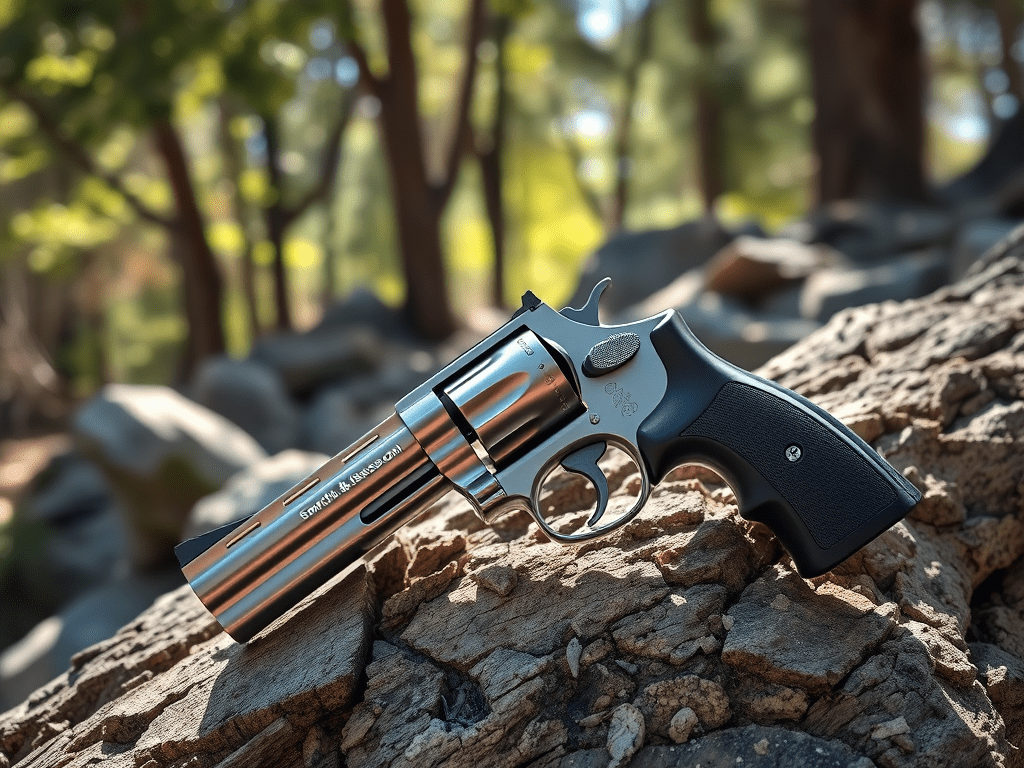
Revolvers are less prone to failures‑to‑feed and stovepipes because they don’t rely on feeding a fresh cartridge from a magazine into a chamber. That doesn’t mean they’re immune to problems — when they do fail, the failure can be more catastrophic — but for a backup gun subjected to mud, sweat, and grime (think ankle carry), a compact revolver like a Smith & Wesson Airweight can be more forgiving.
2. Size and weight
Many small revolvers are lighter and slimmer than equivalent‑caliber semi‑autos. For example, a loaded Glock 43 weighs roughly 20 ounces while a comparable S&W Airweight can be around 14.5 ounces loaded. That difference matters for anyone who’s on their feet a lot — patrol officers, hikers, or folks who prefer light ankle or appendix carry. I often take a .38 Special Airweight when backpacking: it sacrifices capacity and tactical capability, but the weight savings make sense in the woods.
The light weight also makes revolvers comfortable for exercise carry — running or a trip to the gym — where I often choose a small revolver first.
3. Simpler manipulation for some injured or temporarily weakened shooters
I disagree with the blanket advice to recommend revolvers to smaller or weaker people: the heavy double‑action trigger pull can be very difficult for those folks, and that can throw shots off target. However, in a narrow set of circumstances — injury, arthritis, or temporary weakness — a revolver’s simpler manipulation can be an advantage.
After my carpal‑tunnel surgery (which had complications and longer healing), I couldn’t reliably rack a slide but could still pull a trigger. For a couple of months a revolver was a great option — not ideal forever, but perfect for that recovery window.
4. Legal and social practicality
Revolvers don’t have the “tactical black pistol” look that can alarm non‑gun friendly observers. They also inherently meet many magazine‑capacity restrictions in various U.S. jurisdictions. If you travel frequently to places with strict magazine or “assault weapon” perceptions — New York or Massachusetts, for example — a snub‑nose revolver can be a practical travel option (assuming you comply with local laws and permits). For people who don’t want to buy restricted‑capacity magazines for their compact autos, a small revolver can be a simpler, legal workaround when visiting restricted states.
Final thoughts
Revolvers are somewhat outdated in the same way a manual transmission is — less common, but still better in certain situations. They’re not the best primary carry choice for most people because of capacity and reload speed, but they occupy useful niches: a reliable backup for dirty environments, a lightweight option for long‑duration carry or outdoor use, a temporary solution for injured shooters, and a legally practical option for travel to restrictive jurisdictions.
Personally, I don’t see much need for a full‑size .357 Magnum for everyday carry. A small .38 Special Airweight is, for me, indispensable in my concealed‑carry repertoire.
 Timberline Security Solutions
Leave a comment